Physics Ph.D. candidate, University of PittsburghML Research Intern, ScamAI
Jiaqi Gan
I build, train and evaluate machine learning systems, from post-training small language models for AI call agents to interpretable dynamical models of single cells.
I am a Physics Ph.D. candidate at the University of Pittsburgh (expected April 2027), where I work in the Xing Lab on machine learning for single-cell dynamics. Since July 2026 I have been an ML research intern at ScamAI, building training data, LoRA fine-tuning and evaluation for small language models that answer phone calls. In both settings I try to make model behavior checkable: constrain what a model can see or express, test it on cases with known answers, and report uncertainty with the result.
Looking for ML Research Engineer, Machine Learning Engineer and Applied Scientist roles.
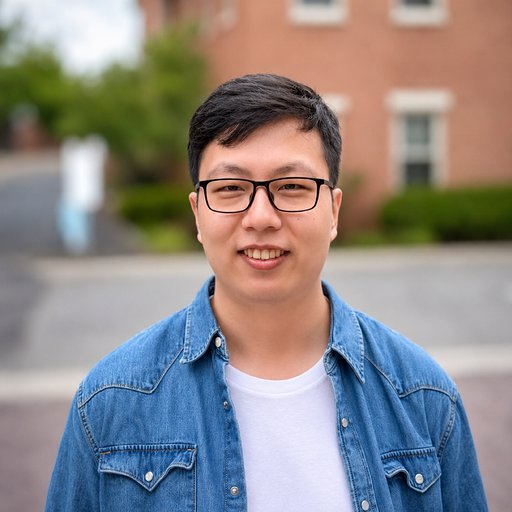
Selected work
All research-
Small Language Model Post-Training for AI Call Agents
ScamAI · 2026
Built quality-controlled training data and one dual-task LoRA recipe so that six 0.6–4B models can reply during a screened call and summarize it for the owner.
Evidence On 192 held-out calls, reply qualification rose from 20.83–53.65% to 93.75–96.88% and summary qualification from 0–6.25% to 43.23–72.40% (custom five-criterion LLM rubric).
-
CallScreenBench
ScamAI · 2026 · Preprint
A benchmark for small language models acting as phone secretaries, measuring how they handle unknown inbound calls and the notes they leave for the owner.
Evidence Scripted stress-test policies exposed a hang-up-and-echo agent with perfect entity recall, which is why every quality measure is paired with a counter-metric.
-
GraphVelo
Xing Lab, University of Pittsburgh · 2025 · Published in Nature Communications
An open-source Python package that refines noisy RNA-velocity estimates and maps cell velocities across RNA and chromatin-accessibility measurements.
Evidence Ground-truth tests on simulated linear, cyclic and branching trajectories; published in Nature Communications (2025) with code, documentation and notebooks.
-
LogicDynamo
Xing Lab, University of Pittsburgh · 2022 – present · Research project; not yet published.
Interpretable ODE models of cell-state change learned from single-cell RNA and RNA-velocity data, built so each learned regulatory effect can be read and tested.
Evidence Validated on 2 simulated dynamical systems and 5+ real single-cell datasets, with ensemble uncertainty and computational gene perturbations.
How the two research lines connect
The data and models differ, but the work has the same shape: decide what a model is allowed to see or express, test it where the right answer is known, and state how far the result can be trusted.
| Practice | Language-model systems | Scientific ML |
|---|---|---|
| Constrain what the model sees or expresses | Reply targets are written from the conversation so far; owner summaries only from the finished transcript. Post-training small LMs for call agents | Gene dynamics as an additive sum of single-regulator and pairwise terms, each a saturating dose-response with sparse regulation. LogicDynamo |
| Test against known answers | Six scripted policies probe the benchmark's metrics; a hang-up-and-echo agent reached perfect entity recall. CallScreenBench | Velocity direction, magnitude and sign checked on simulated linear, cyclic and branching trajectories. GraphVelo |
| Report uncertainty and limits | Paired bootstrap intervals, counter-metrics instead of one composite score, and stated limits on what an LLM rubric measures. CallScreenBench · Post-training small LMs for call agents | Ensemble uncertainty, noise sensitivity, and speed agreement compared across PCA and UMAP embeddings. LogicDynamo · GraphVelo |
Selected publications
All publicationsCallScreenBench: Benchmarking Small Language Models as Phone Secretaries
arXiv:2608.01033 (2026)
GraphVelo allows for accurate inference of multimodal velocities and molecular mechanisms for single cells
Nature Communications 16, 7831 (2025) · DOI 10.1038/s41467-025-62784-w
* Equal contribution and † corresponding author, as marked in each paper. The exact author notes and BibTeX are on the publications page.
Contact
Email is the best way to reach me: jig77@pitt.edu